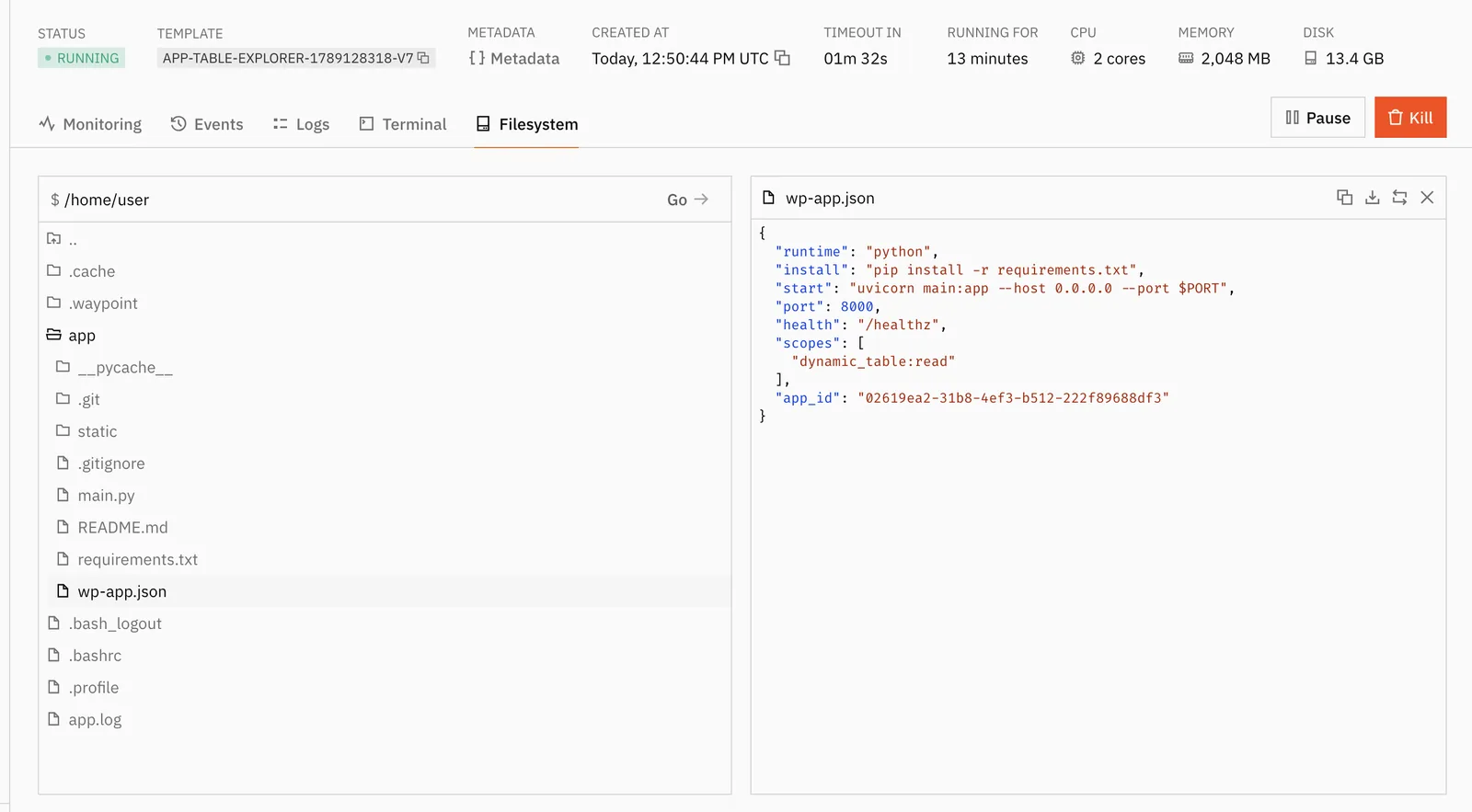
Sandboxed apps
Sometimes a team needs a small real application: an explorer for their data, a calculator, a form with some logic behind it. Big companies have started building internal app builders for exactly this, such as Ramp's Glass and Stripe's Harbor (The Pragmatic Engineer wrote about the trend). I am building the same idea into WP as sandboxed apps: you ask Chip for an app, and it writes it, ships it and keeps it running.
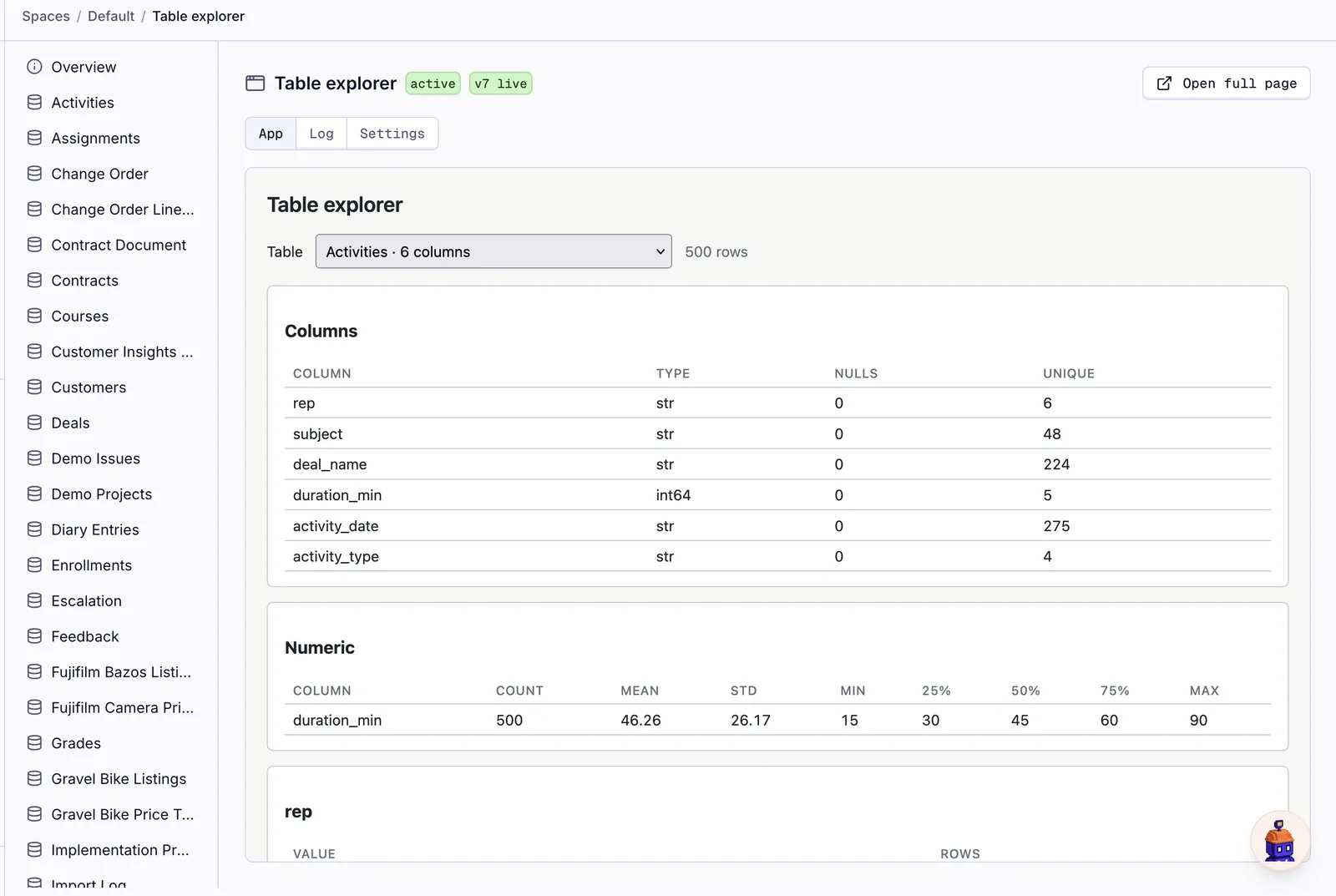
Built by an AI, kept like real software
Every app lives in a git repository, so engineers can clone it, review it and push changes too. Each push shows whether a person or an agent made it.

Every version is a release you can inspect and roll back to with one click.
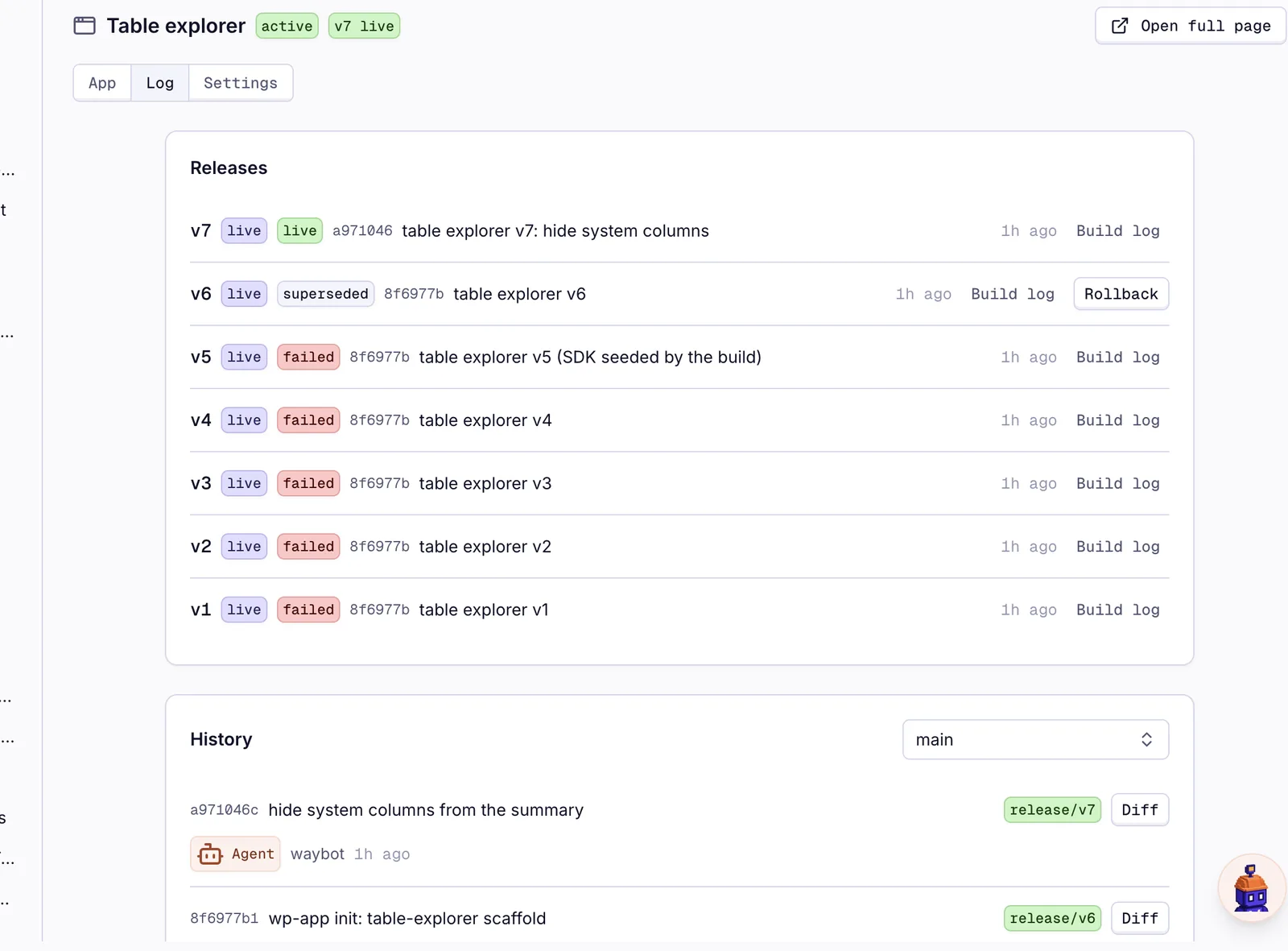
This screenshot is my favourite: Chip's first five attempts failed to build, it read the errors, fixed them, and version 7 went live. Nobody ever saw the broken versions.
Cheap to run, safe to open
A short file in the repository says how to start the app and which data it may read.
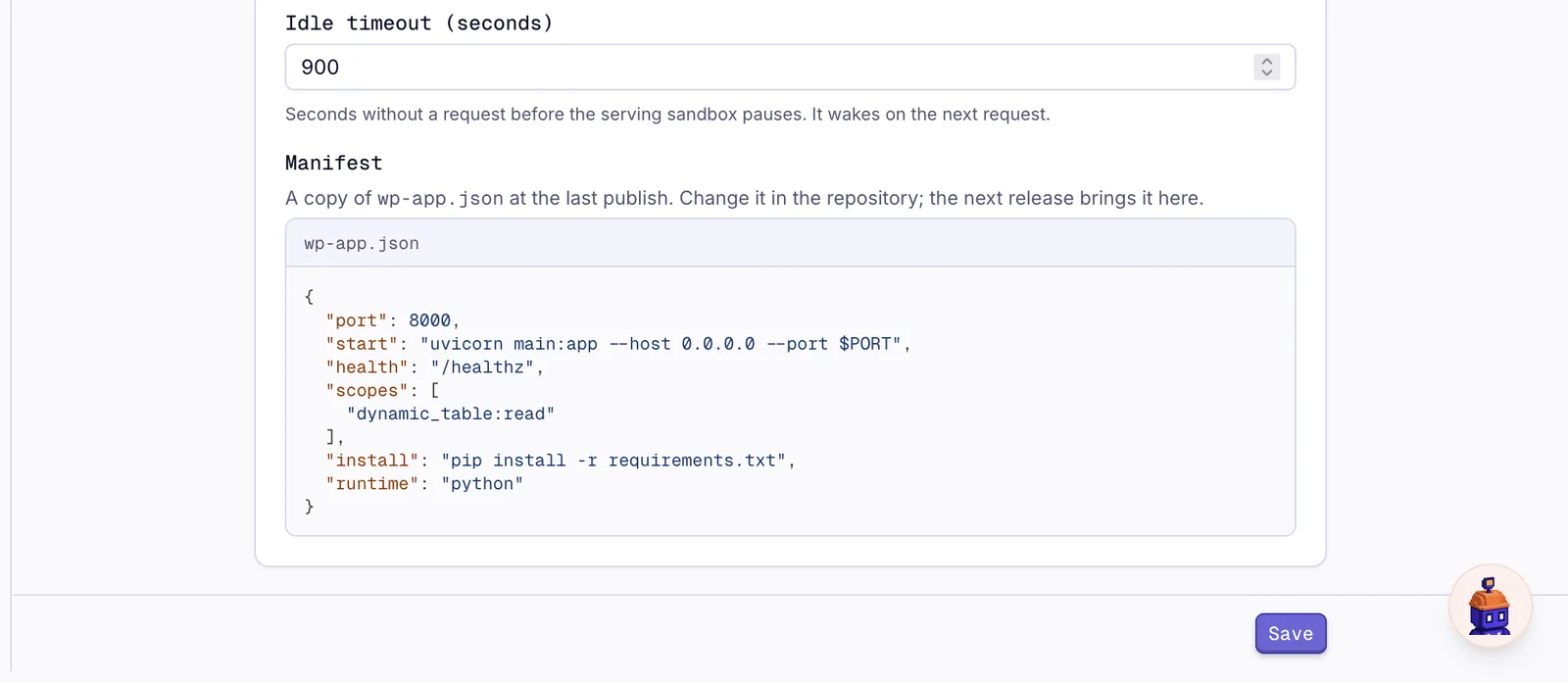
Each app runs in its own sandbox that goes to sleep when nobody is using it and wakes up on the next visit, so an app nobody is using costs almost nothing. An app can only see the data it asked for, and only as the person viewing it.